Mission Overview

Total shoulder arthroplasty (TSA) often faces a major long-term failure mode: the loosening of the glenoid component due to the "rocking-horse" effect. The goal of this project was to design a robust implant and validate its performance experimentally.

Methodology: The approach relied on the V-cycle of engineering: designing a specific geometry (Pegs vs Keel), performing physical compression and descellement tests on a prototype, and correlating these results with a numerical model (Abaqus) to validate the design.

// TECH_STACK

CATIA V5
Abaqus (FEA)
Mech. Testing
Biomechanics

Engineering Process

Design Strategy

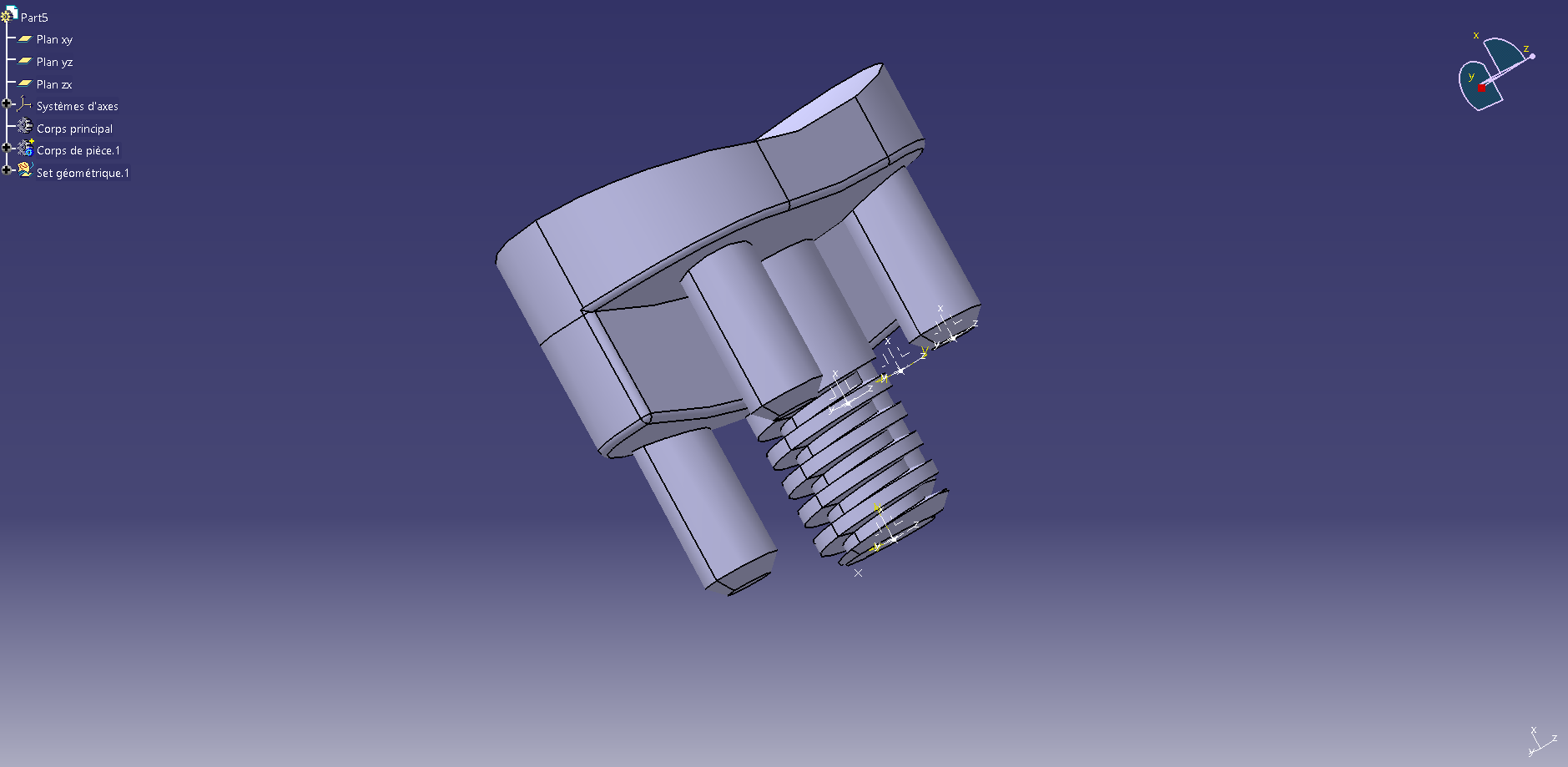
Design choice: Pegged Glenoid Component

Analysis of fixation methods. Decision to design a Pegged glenoid component (Plots) to optimize bone anchorage and stress distribution compared to keeled designs.

Experimental Validation
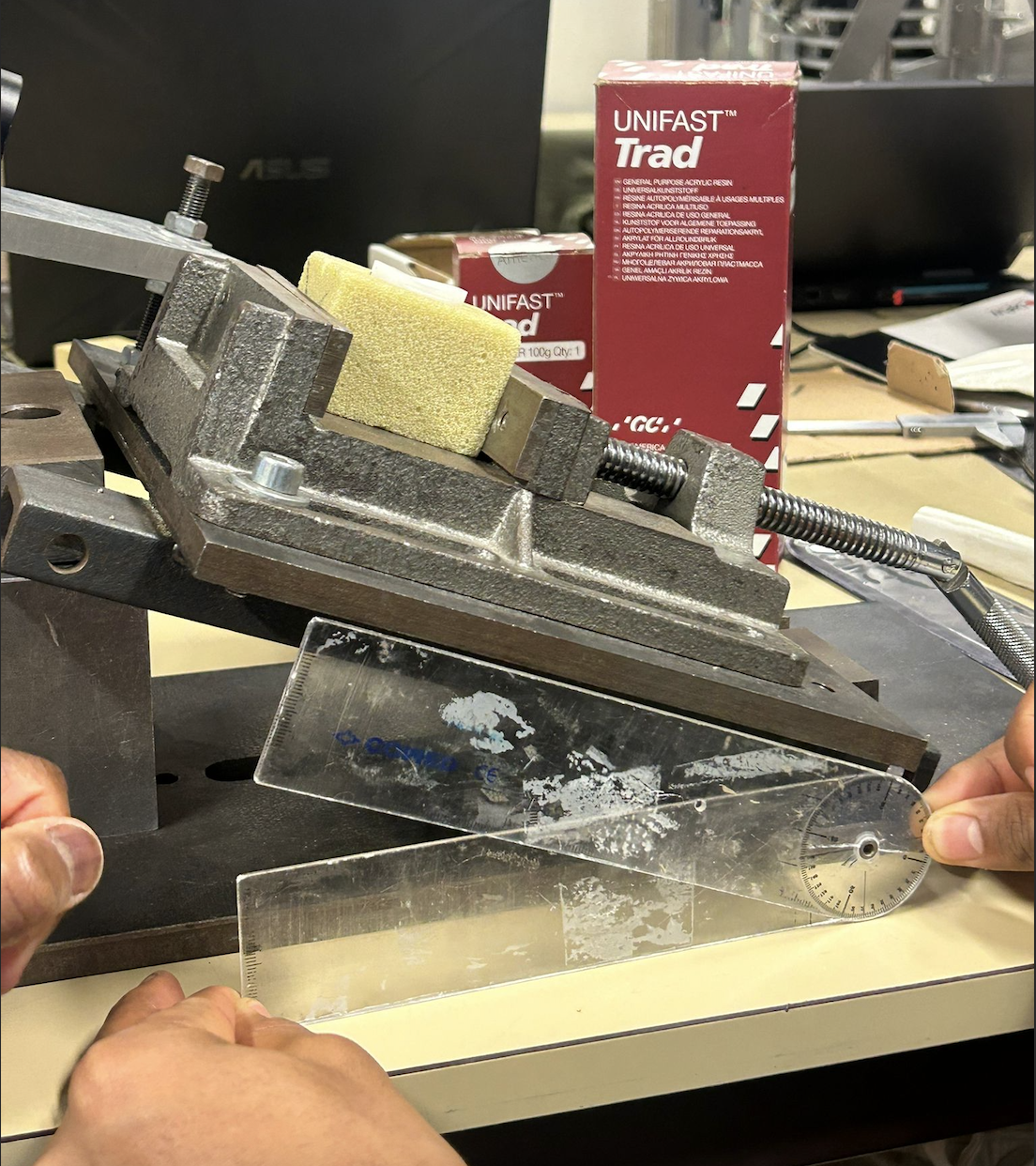
Mechanical Testing Setup

Setup of a dedicated test bench to simulate physiological loads. Execution of cyclic loading tests (up to 1000N) on the prototype. Click to see the full testing sequence.

Finite Element Analysis
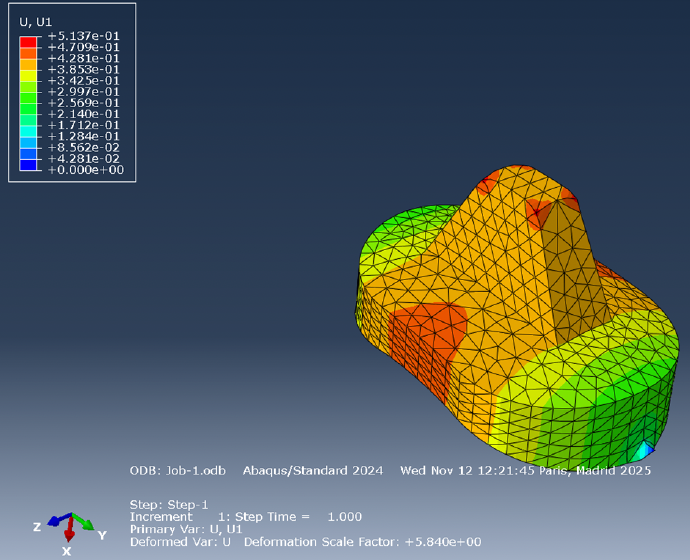
Abaqus FEA Simulation Result

Numerical validation using Abaqus to correlate with experimental data. Comparison of displacements and stress concentrations showing excellent agreement with the physical model.

Key Outcomes

  • Model Correlation: Strong agreement between the FEA model predictions and the physical displacement measured on the test bench.
  • Mesh Strategy: Demonstrated that quadratic tetrahedral elements were necessary to accurately capture the deformation fields.
  • Design Robustness: The pegged design showed resistance to eccentric loading, with failure modes identified in the prototype manufacturing rather than the geometry itself.